

I didn’t write this piece about landmarks. There are enough travel guides for that.
I wanted to talk about what remains when the cameras are long turned off – the invisible things you can’t photograph: the soul of this city.
This is not an attempt to explain Istanbul, but to feel it. A city like this cannot be described – only experienced, in moments, in voices, in the scent of sea and tar. Perhaps this text is my quiet attempt to touch the intangible. Because Istanbul changes you, even if you stay for only a moment.

Mehmet Özseren
There are cities about which everything seems to have already been said. Cities you recognize on postcards, rediscover in guidebooks, or see described in glossy brochures. And then there are cities you must feel rather than see. You cannot write about them like tourist attractions – only about their soul.
I’m not writing about Topkapi Palace, the Hagia Sophia, or the Grand Bazaar. This city is more than its monuments. It lives, breathes, loves – sometimes too loudly, sometimes too quietly. I’m writing about Istanbul, the city that gave birth to me – and never truly let me go.
I was born in Istanbul – the city that stretches across two continents yet belongs fully to neither. A city that floats like a secret between sky and water.
As a child, I left it with my family – yet an invisible thread always pulled me back. The city that cradled me at birth never let me go. It was never just a memory, but a force. A whisper sometimes louder than the noise of everyday life – calling me, again and again, through the years.
Istanbul – my diva.
Biased, confident, spoiled, moody, melancholic. A city that loves and wounds, that seduces and rejects. That rocks you in its arms and closes its doors the next day. A turbulent relationship, full of passion and contradictions. And perhaps that’s what makes it so human.
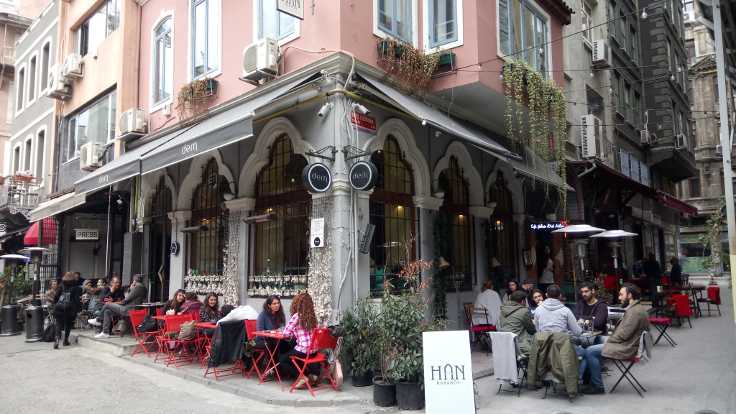
Karaköy – where old workshops, modern cafés, and the scent of seawater continue to write Istanbul’s story.
When I walk through the streets of Karaköy, I feel the breath of my childhood. The voices of merchants, the distant call of the muezzin, the rumble of ships gliding across the Bosphorus – all sound like a melody I never forgot. Every corner holds a story, every smile a memory, every sunset over the Golden Horn a piece of the city’s soul.
But Istanbul cannot be understood through grand images alone. You have to venture into its smaller chapters – where life is unfiltered, raw, and real.
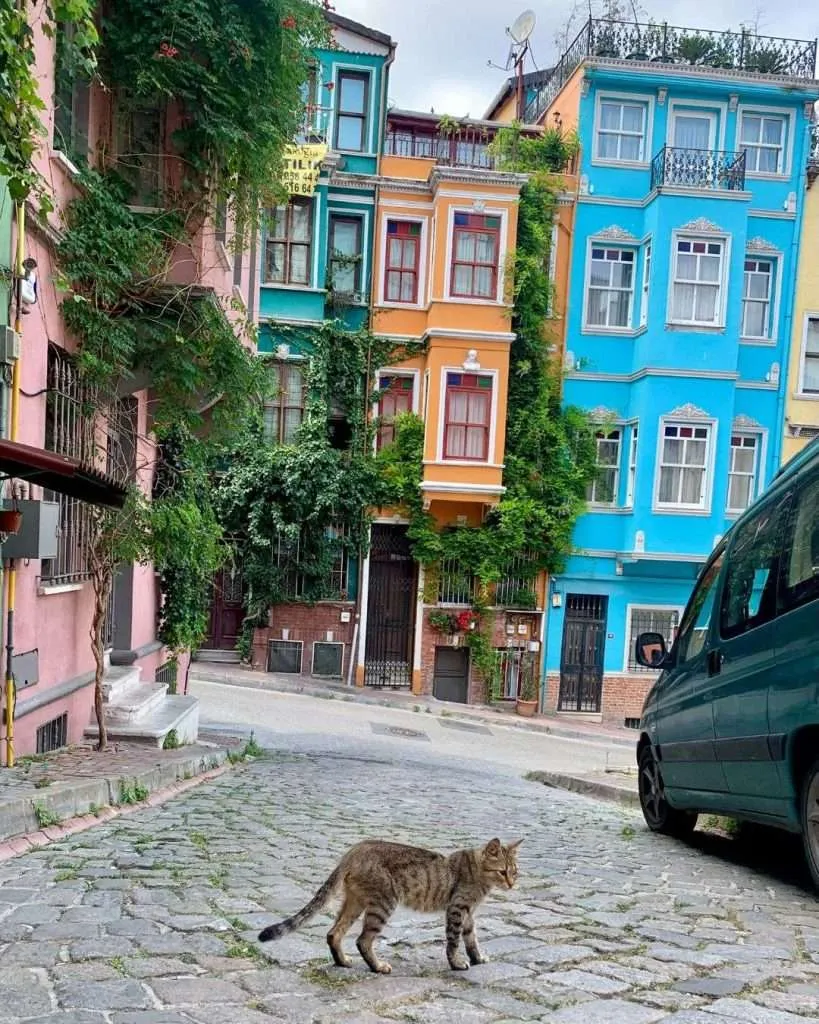
Balat – one of Istanbul’s most colorful neighborhoods, where history, religion, and community live in narrow streets. Between faded façades and fluttering laundry, you can feel the city’s true, unpolished heart.
In the alleys of Balat, every door tells its own story. Paint peels from the old wooden doors, children play with makeshift balls of fabric, and laundry flutters overhead in the wind like forgotten prayers. It’s a neighborhood that lives, laughs, fights – and teaches you that beauty lies not in perfection but in the unfinished, the human.
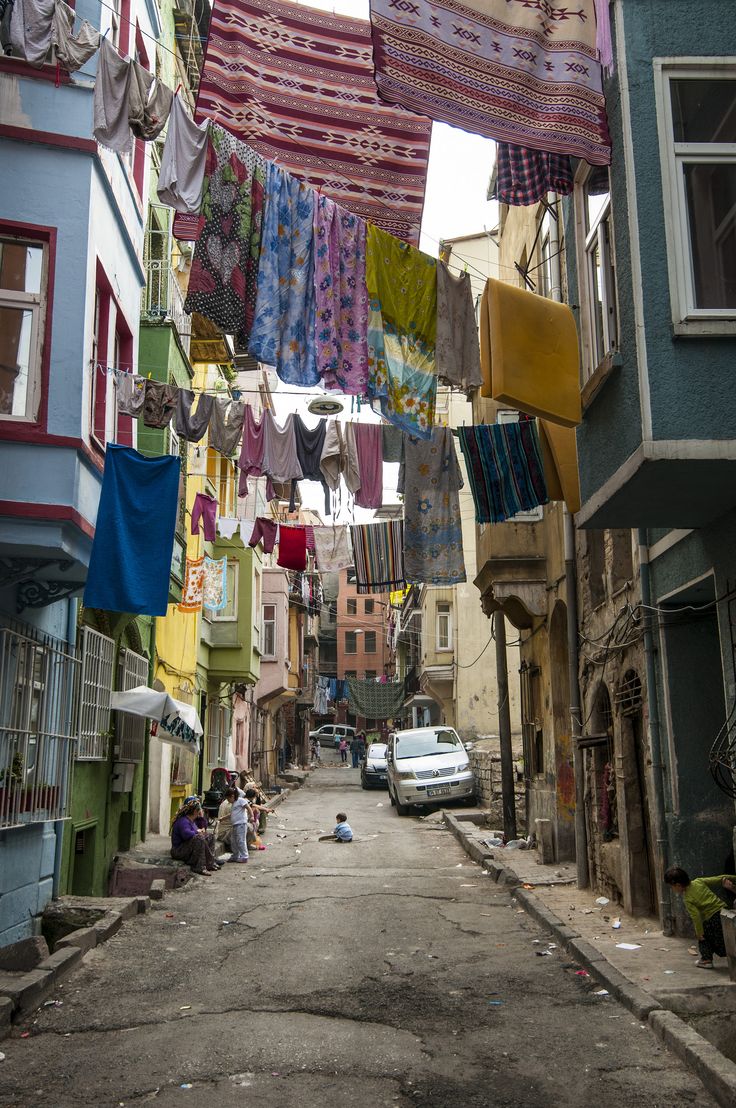
Tarlabaşı – here beats another heart of Istanbul. Among faded façades, improvised balconies, and the scent of street food, the city lives in its rawest, most honest form. Poverty and dignity, closeness and distance – sometimes just a wall apart.
Across from Balat, on the other side of the Golden Horn, lies Tarlabaşı – a neighborhood where another heart of Istanbul beats.
Among buildings that have seen better days, languages, scents, dreams, and survival stories intertwine.
Here, worlds meet: the glittering Beyoğlu and forgotten Tarlabaşı are often separated by only a few steps – and entire lifetimes. Istanbul is this tension too – wealth beside poverty, splendor beside struggle, hope beside fatigue.
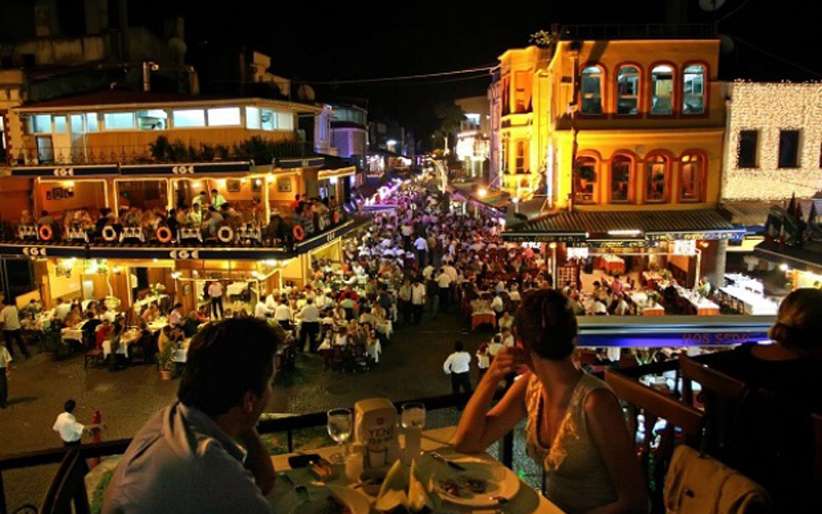
Kumkapı – where the air smells of grilled fish and raki, musicians play at every table, and strangers become friends for one evening. A place where Istanbul laughs, sings, and lives – deep into the night.
And then there are the evenings in Kumkapı, where tables overflow with meze, where musicians wander between the alleys, and the voices of guests merge with the clinking of glasses. The smell of freshly grilled fish, the ring of raki glasses, the hum of songs everyone knows but no one quite remembers – this is the Istanbul of nights that don’t sleep, but dream.
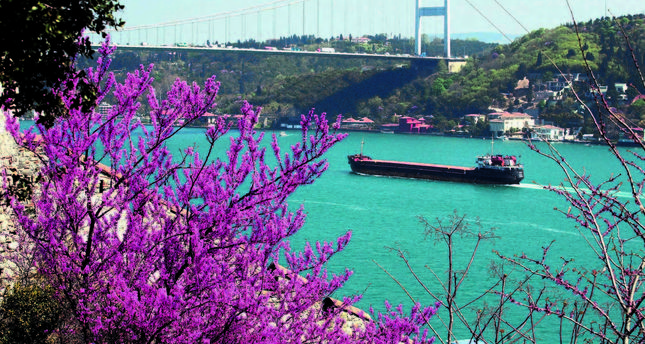
The Arguvan Bloom – a symbol of longing and melancholy. In the sounds of Istanbul’s nights, in songs and conversations, it lives on – a quiet reminder of Anatolia’s heart and soul.
Arguvan Bloom – that’s what some call the melancholy spell that hangs over the city, especially in spring, when the wind blows from the Marmara Sea and the air is filled with music. This city doesn’t bloom loudly, but softly, with a dignity both old and young. Perhaps that’s Istanbul’s true magic – that it blossoms even in its contradictions.
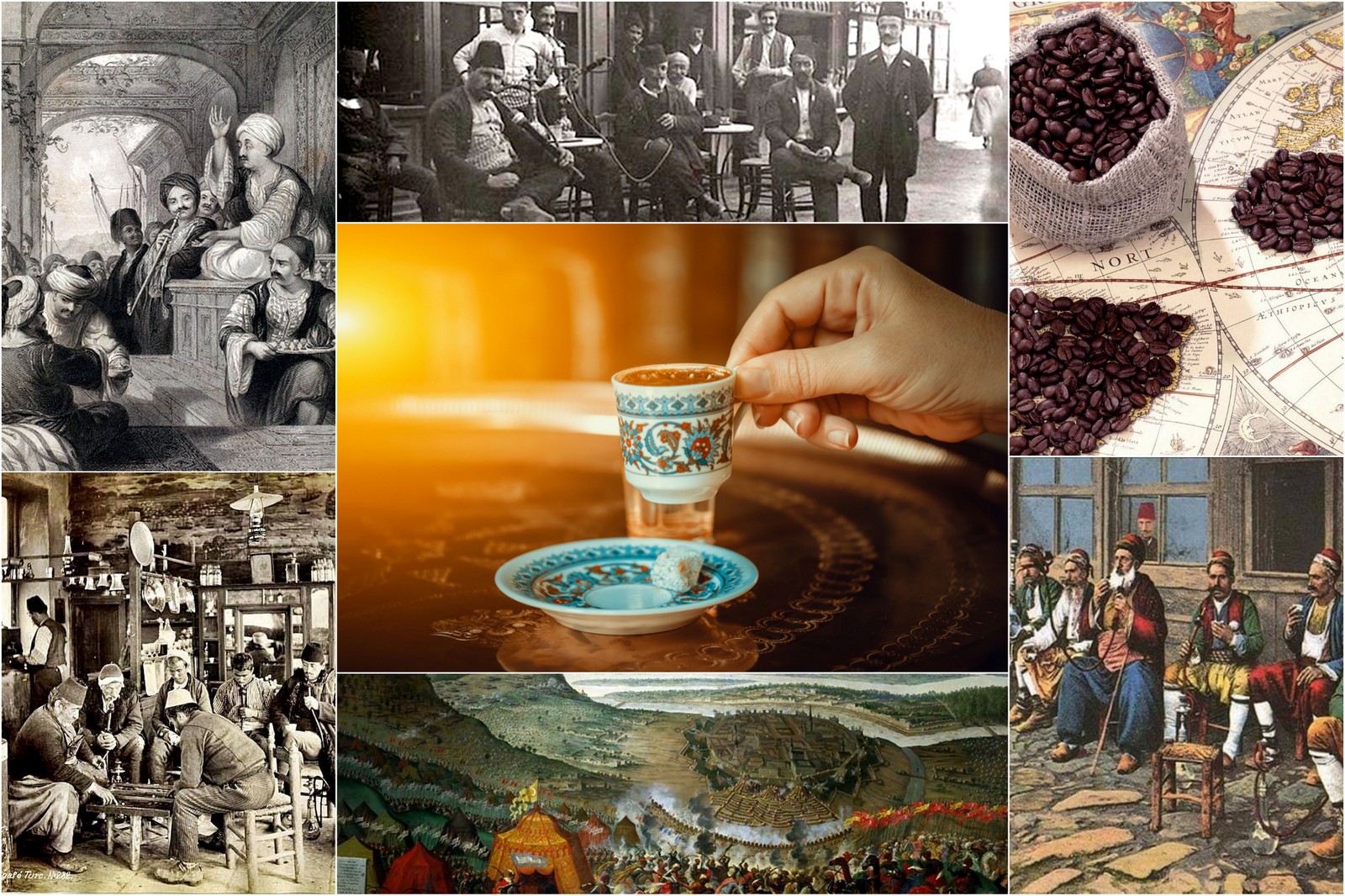
Coffee enjoyment – a Turkish invention: Istanbul was the city that carried it into the world. In the narrow streets of Tahtakale and Eminönü, the first beans were roasted, ground, brewed, shared. Here – in the steaming copper pots of Ottoman cafés – began a culture that went far beyond taste: the art of sitting together, listening, and being silent.
It’s no coincidence that coffee began its journey around the world from this city. The first mocha, the first scent of roasted beans – it all came from these streets, from small cafés where people shared stories instead of schedules. In Istanbul, coffee has a soul. It’s not a drink – it’s a ritual, a conversation, a silent pause between past and present.
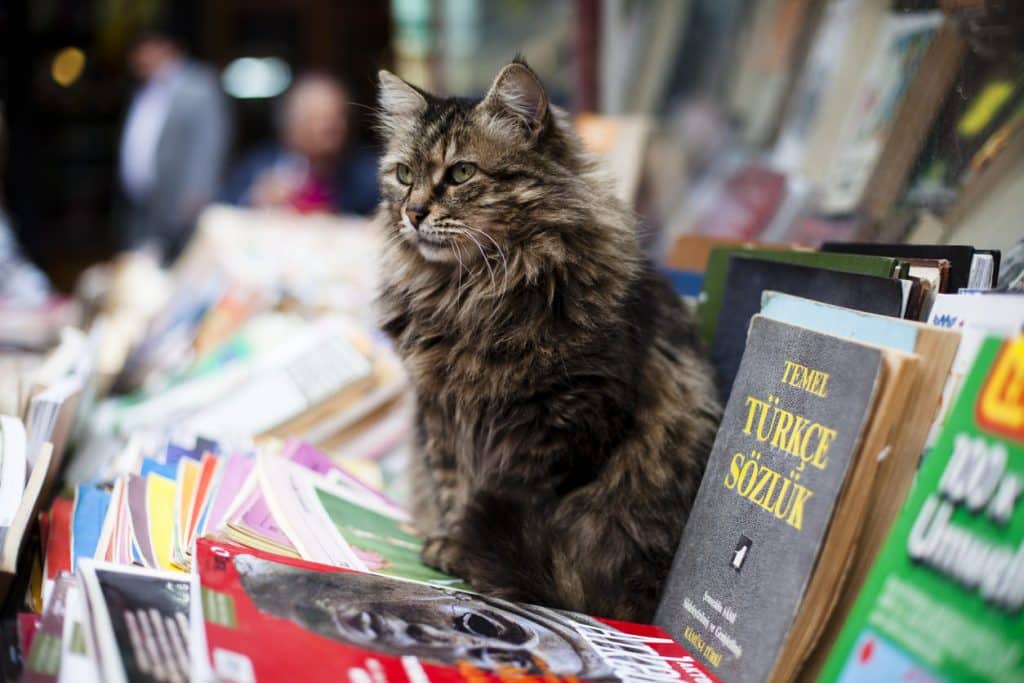
Cats of Istanbul – they are more than animals. They are part of the city, its soul, its history, its gentleness. Free spirits who belong to no one – perhaps that’s why they are the true rulers of Istanbul.
And then there are the animals – the true citizens of this city, especially the cats. They sit on the walls of Balat, nap in the bookshops of Kadıköy, and stroll confidently through mosque courtyards and cafés as if the city belonged to them. And perhaps it does. Because those who truly know Istanbul understand: this city isn’t owned – it’s shared, between people and cats, between history and the present, between reality and dream.
- Orhan Pamuk, Istanbul: Memories and the City
“A city suffering from its own past.”
I think he was right. But it also lives through that past. It wears it like a perfume that never fully fades – sometimes sweet, sometimes bitter, but always real.
- Elif Shafak, The Bastard of Istanbul
“A city of contradictions, of lights and shadows, of men and women who do not understand each other yet share the same sky.”
- Ahmet Hamdi Tanpınar, Huzur (A Mind at Peace)
“No one can live in this city without being changed by it.”
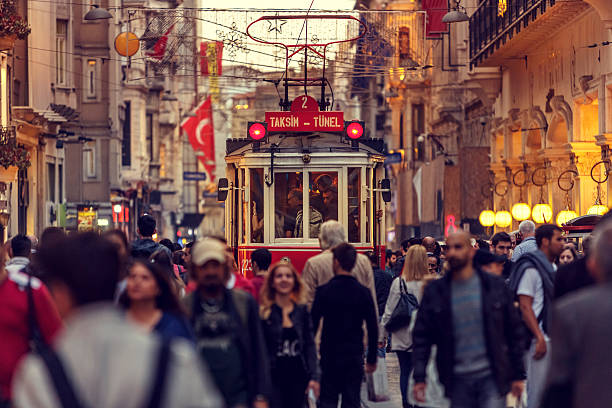
Istanbul Beyoğlu – the city’s vibrant promenade. Between old theaters, Art Nouveau façades, and modern cafés, you feel the heartbeat of a city that never stands still.
Perhaps that is Istanbul’s greatest secret: It changes you without you noticing. It takes you apart and puts you back together again.
Between the ancient walls of Hagia Sophia and the glittering neon lights of Beyoğlu, you learn that opposites are not contradictions – they are life’s truest form. Here, tradition and modernity dance in a restless, eternal rhythm.
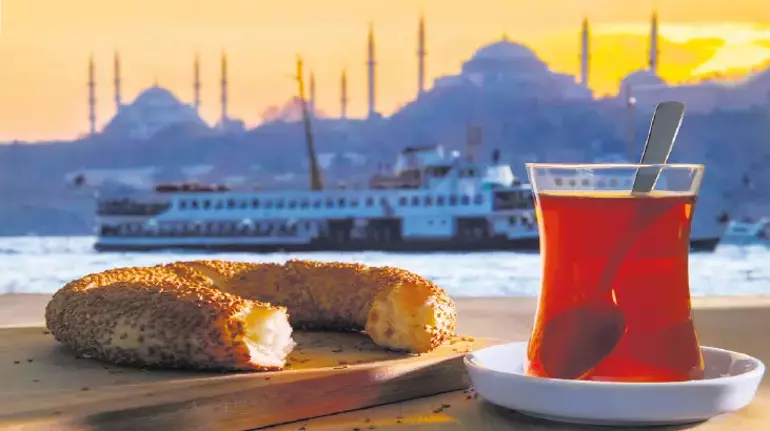
Simit and Turkish Tea – the scent of sesame and fresh pastry belongs to Istanbul just as much as the sound of ferries and the distant ring of trams. A simple breakfast that became a symbol of the city – humble, familiar, everlasting.
To love Istanbul is to love its chaos, its compassion, its warmth. To love the jumble of voices, the smell of freshly baked simit, the melancholy in the eyes of fishermen on the Galata Bridge, and the endless blue of the Bosphorus that comforts even on gray days.
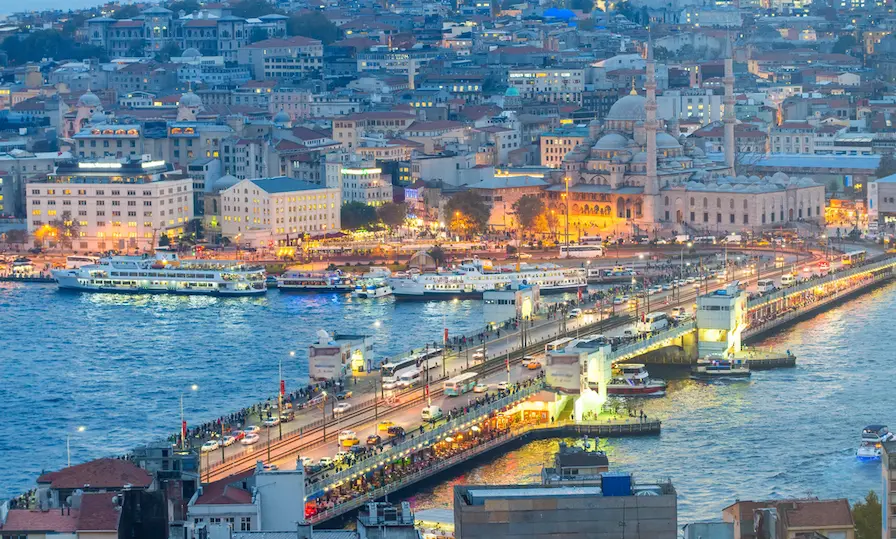
Galata Bridge – where people from every corner of the city meet. Fishermen cast their lines, tourists their glances, merchants their calls. Beneath it smells of grilled fish, above it flows the traffic of life. A place where sky, water, and humanity converge.
I call her my diva – but perhaps she’s more than that. She is my teacher, my longing, my reflection. The city that sent me out into the world – and keeps calling me home.
And every time I see her, I know again: Europe doesn’t end here. It begins. Right here – between two continents. And between two heartbeats.
Books that make Istanbul tangible
- Orhan Pamuk: Istanbul – Memories and the City
- Elif Shafak: The Bastard of Istanbul
- Ahmet Hamdi Tanpınar: Huzur (A Mind at Peace)
- Pierre Loti: Aziyadé – a French view of Ottoman Istanbul
- Edmondo de Amicis: Constantinople – a 19th-century love letter to the city


Guest Experiences & Forum
EmilyFromSeattle
11.11.2025Dear Mehemt,
I’m from Seattle and, to be honest, I’ve never been to Turkey before.
I was actually just browsing the internet earlier today, trying to learn more about Istanbul what it’s like to walk through its streets, what people eat, how it feels to be there and somehow, I ended up here on this forum.
Reading the posts and the way people describe the city really moved me.
It’s strange how a place I’ve never seen can already feel familiar.
The more I read about Istanbul, the more I imagine it: the narrow streets of old neighborhoods, the sound of ferries crossing the Bosphorus, the mix of ancient and modern that everyone keeps talking about.
I’ve always loved cities with history, but Istanbul seems to have layers of time Roman, Byzantine, Ottoman, and now this energetic, modern rhythm.
It feels like a place where the past isn’t gone, it just lives alongside the present.
And then there’s the nature, the sea, the hills, the sunsets that people say you can’t describe, only feel.
I think that’s what caught me most about this discussion.
It’s not just about a city-it’s about how people feel when they’re there.
There’s something very human about that.
I’m now seriously planning to visit Turkey, not just Istanbul, but maybe also Cappadocia, Ephesus, and the coast.
I want to see the landscapes, the old ruins, and just sit somewhere near the water and watch life happen.
I never thought a random evening of internet browsing would make me dream of a city I’ve never seen before.
But now it’s on my list and it’s not just a destination anymore.
It feels like a story I want to be part of.
Mehmet
11.11.2025